In 1946, gilded Roman horsemen emerged from the ground in Pergola
Two horses, two riders and two female figures: Pergola's Gilded Bronzes are a unique Roman statuary group and one of Le Marche's most spectacular archaeological discoveries.
Sources consulted:
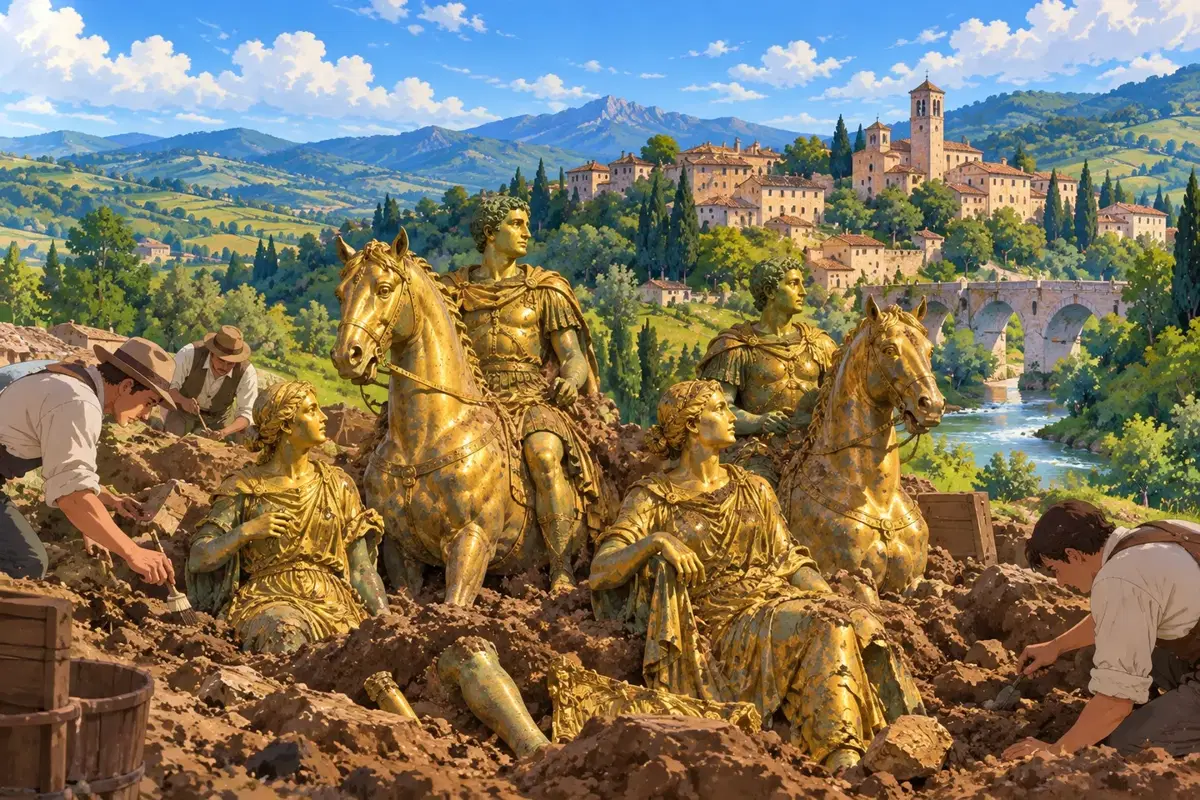
26 June 1946: fragments in the soil
The modern story of the Gilded Bronzes began on 26 June 1946 at Cartoceto di Pergola. Hundreds of metal fragments emerged rather than intact statues. The museum records more than three hundred pieces weighing around nine hundred kilograms: an ensemble first had to be recognised within broken material. [1]
Damage and deformation led the museum to suggest deliberate destruction before burial. This is an interpretation, not an eyewitness account. Separating physical evidence from explanation lets us appreciate the objects without filling the gaps with an overly certain story. [1]
A monument reassembled
The group comprised two women, two riders and two horses. The Ministry of Culture dates it between the first century BC and first century AD, encouraging caution about precise identities. What remains evident is the Roman ensemble’s monumental ambition. [2]
Gilding turned bronze into a luminous image of prestige. Reassembly makes bodies and scale legible again while retaining the story of the breaks. Look at figures and missing areas together: restoration history is part of the experience.
Seeing the bronzes in Pergola
Check the museum’s current opening, services and accessibility before visiting Pergola. Do not seek the group in the agricultural discovery location: the visitor context is now a museum. Distinguish the findspot from the exhibition venue. [1][2]
Afterwards, explore Pergola’s centre: the contrast between the small town and monumental group brings home the discovery’s significance. For a broader archaeological itinerary, add Pesaro’s Oliveriano Museum as another stop, giving each collection proper time.