In Castel Trosino, a Lombard burial ground changed the history of Italian archaeology
Weapons, jewellery and rich grave goods found near Ascoli revealed a Lombard presence far more complex than had been imagined.
Sources consulted:
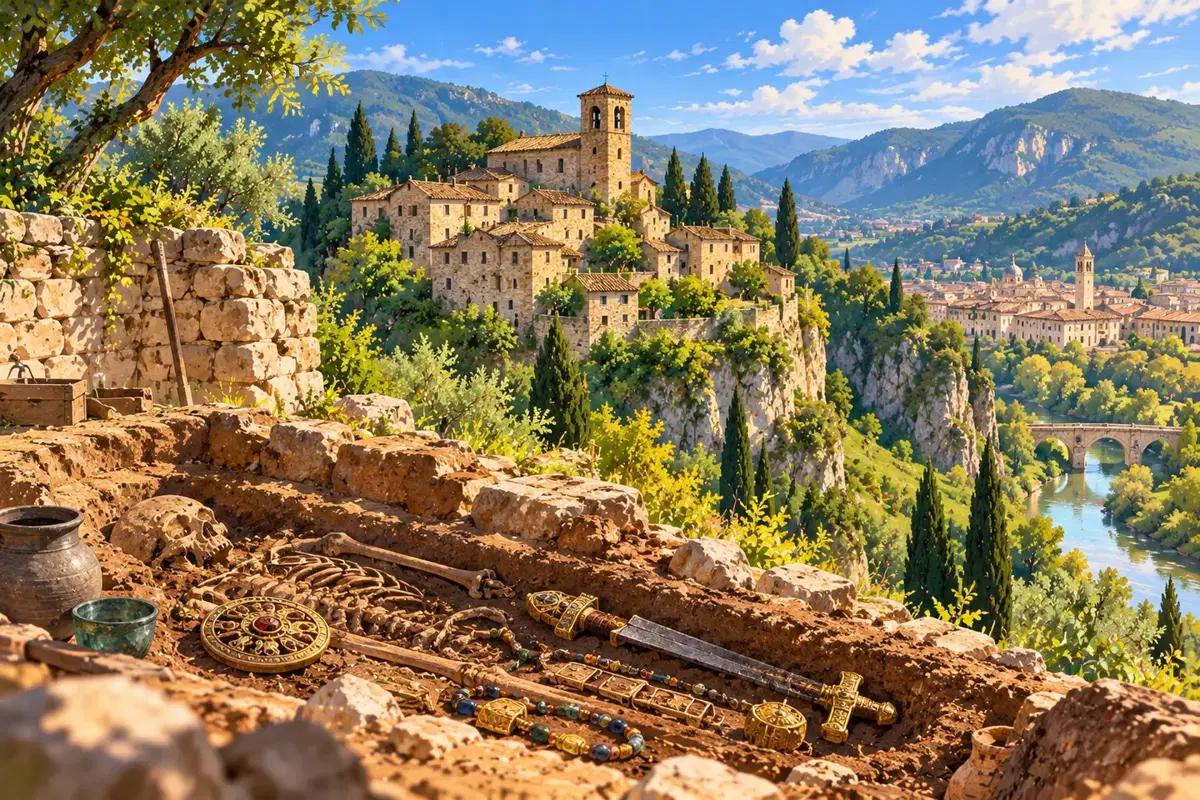
1893: the ground reveals a community
In 1893, a chance discovery near Castel Trosino revealed an early medieval cemetery. Subsequent excavations made it fundamental to understanding the Ascoli area. More than treasure, the graves offered evidence of a community's funerary practices. [1][2]
Research also records earlier finds and objects dispersed through collecting. A jewel separated from its grave loses contextual information. Excavation history therefore includes documentation, provenance and the challenge of reconnecting objects already in circulation. [2]
Grave goods and cultural encounters
Weapons, ornaments and everyday objects vary between burials. Their combinations inform debates about social roles and contacts. Calling the cemetery Lombard does not make every object an unchanging signature of a single identity. [1][2]
The municipal history highlights late Roman and Lombard funerary traditions together, suggesting transformation rather than a simple opposition of peoples. Giulio Gabrielli's notes also show how recording discoveries shapes later understanding. [1]
Village, site and objects
Visit the village to understand its setting, but distinguish settlement, cemetery and museums. Objects are not all kept on site and displays can change. Ask Ascoli's museums where particular materials are currently exhibited. [1]
Connect the rocky setting with small objects without expecting a reconstructed Lombard town. Follow permitted paths and check archaeological access. Ask what objects buried with the dead can reveal, and what remains hypothetical.