In Camerano, they say the town is bigger underground than above it
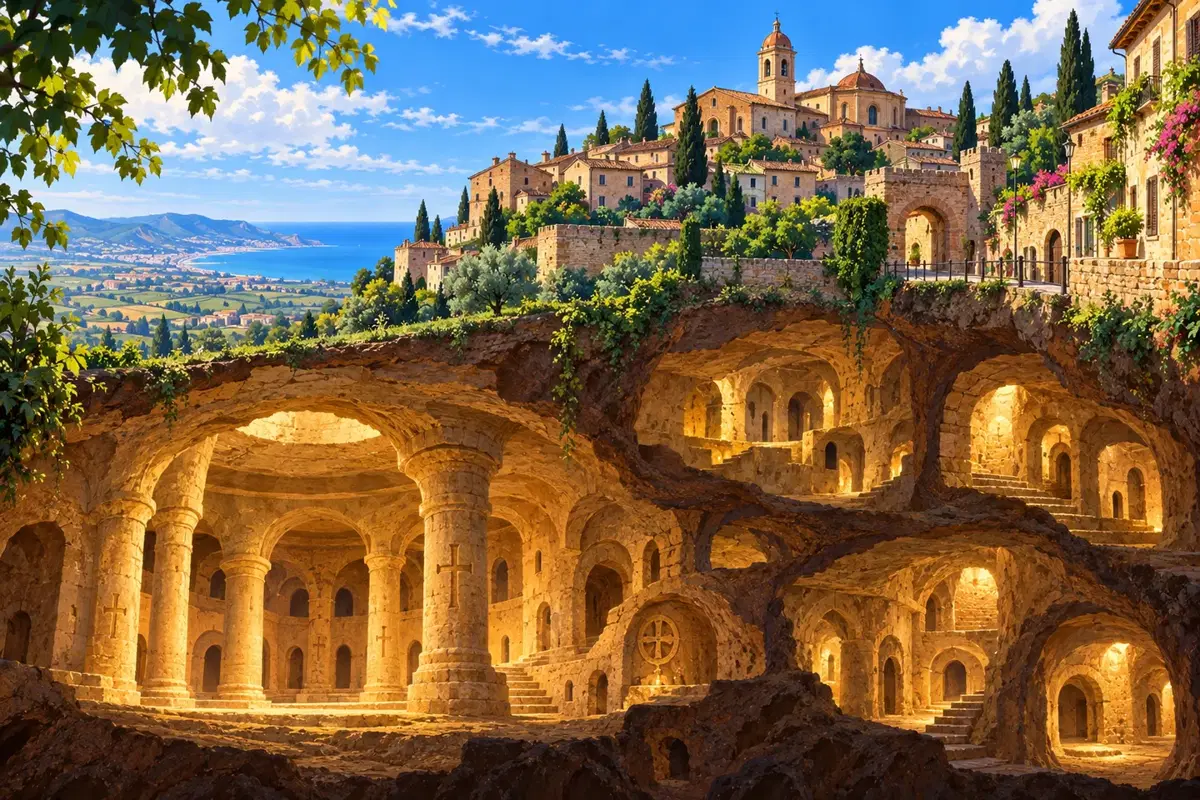
Tunnels, circular rooms, columns, religious symbols and spaces carved into sandstone: beneath this Conero village lies a parallel city.
Sources consulted:
A town carved by people
Beneath Camerano’s historic centre lies a network carved into sandstone. Calling them caves does not make them equivalent to Frasassi’s natural cavities: human work is central here. Rooms and passages form a landscape created by removing material beneath the town’s streets. [1]
The variety of spaces makes “simple cellars” an inadequate explanation. Architecture, decoration and layout suggest changing uses. Yet continuous documentation does not explain every room’s origins: fascination is no reason to present every hypothesis as historical certainty. [1]
The refuge of July 1944
A clearer chapter belongs to the Second World War. Regional sources record residents sheltering underground in July 1944. These are therefore more than atmospheric rooms: they also preserve the memory of people seeking protection from wartime danger. [2][3]
This changes how passages are read. A room may serve storage, changing needs or emergency shelter. There is no need to assign one function to the entire complex: hidden cities change with the people who use them.
Visit underground, rediscover the Conero
Consult the operator’s site and follow its booking instructions. Ask about the route, temperature and accessibility when travelling with children or particular needs. An easy walk to the town square does not establish conditions on an underground itinerary. [1]
Return to daylight and explore Camerano’s centre: comparing above and below is part of the experience. Add Sirolo or Numana on the Conero while distinguishing artificial underground spaces from natural caves. These are different landscapes that can share a trip.