Invisible Highways for Flocks Once Crossed the Marche Mountains
Transhumance connected pastures, valleys and distant territories. Many Apennine trails still bear traces of that pastoral world.
Sources consulted:
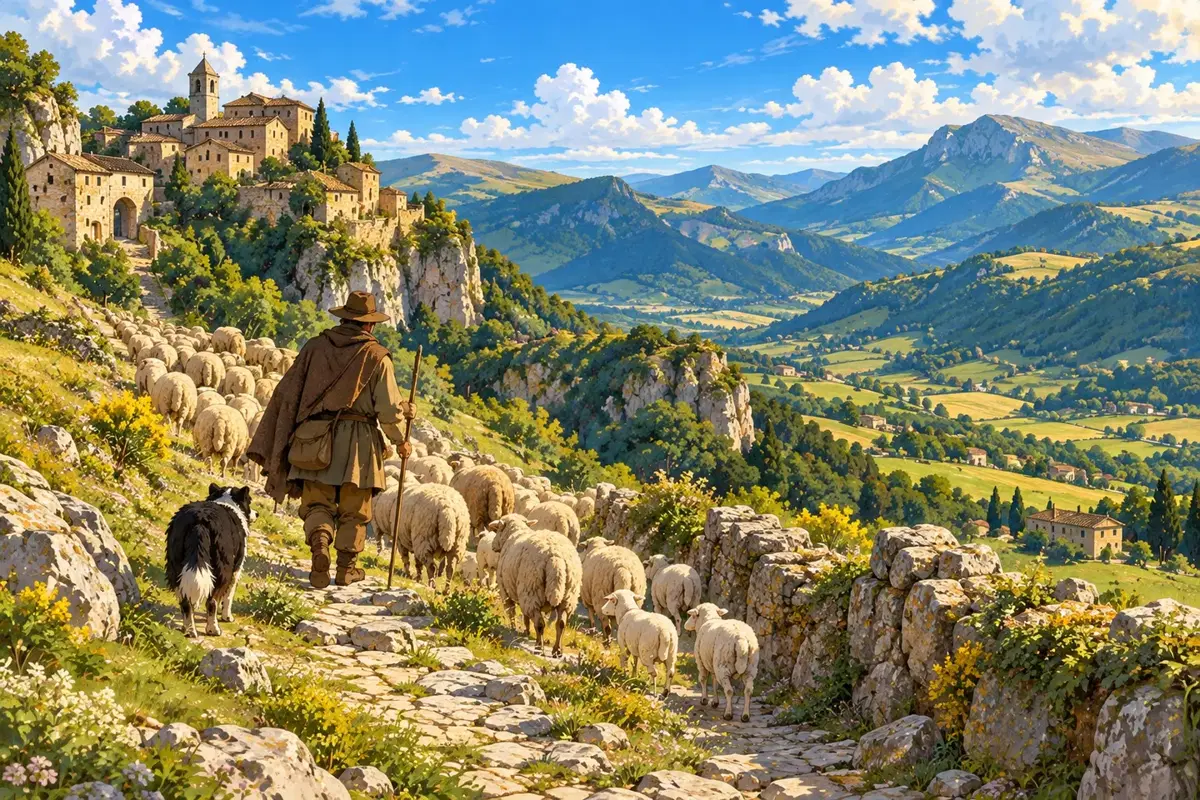
Moving to find pasture
Before becoming a travel experience, transhumance is work: moving animals with changing seasons and pasture availability. It requires knowledge of water, terrain and weather. The journey links distant places, turning a farming necessity into a network of encounters, skills and exchanges. [1]
UNESCO recognises practices and knowledge as intangible heritage, not one particular road. That does not make every Marche path a “UNESCO trail”. Its value lies in relations between people, animals and ecosystems, and in passing on skills: navigation, flock care, resource management and organising the journey. [1]
Between Visso, Macereto and Cupi
In the Sibillini, shepherds’ paths intersect with pilgrims’ routes. The Park calls the Visso–Cupi section of its Grand Ring the “way of pilgrims and shepherds”. Crossing Macereto’s landscape shows devotion, movement and pasture use sharing one territory while remaining different activities. [2]
Macereto’s complex included shelter for travellers, while Cupi retains links to sheep farming. These clues reveal more than a romantic image of a lone shepherd: they point to an organised life of buildings, stopping places, work and relationships connecting the mountains with other territories. [2]
Walk through a working landscape respectfully
Explore through an official walking route or a guided activity about pastoral culture. Check the Park’s route page and current notices first: a cultural description of Macereto does not guarantee that its sanctuary or every building along the route is open. [2]
If you meet a flock, give animals space and follow the shepherd’s instructions without stepping between dogs and livestock. Book a visitor-friendly farm directly to connect landscape and local produce. Tasting becomes meaningful when someone explains the work behind a cheese, not just its name.