The Mole Vanvitelliana Began as a Quarantine Island
Before becoming a cultural venue, Vanvitelli's pentagon isolated potentially infected people and goods to protect Ancona from epidemics.
Sources consulted:
An island designed for separation
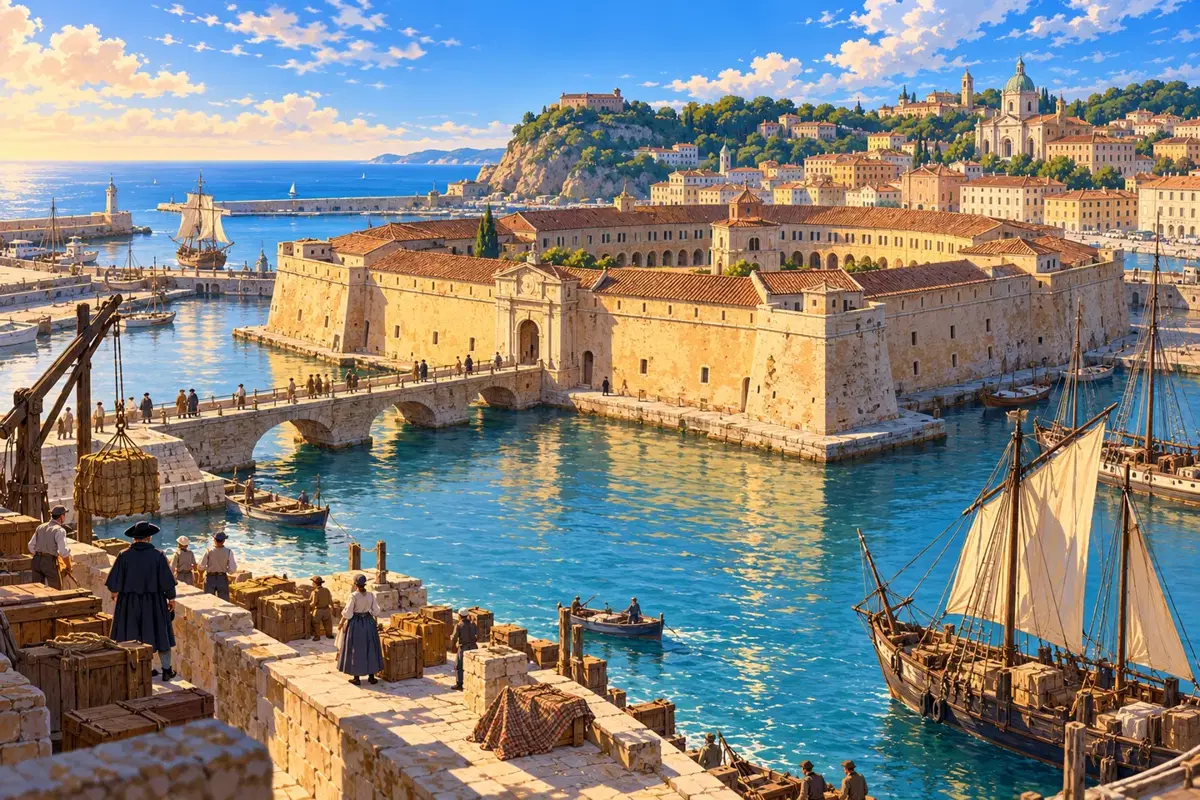
Ancona’s Mole Vanvitelliana began as a quarantine station, not a museum or noble residence. Luigi Vanvitelli designed it during the eighteenth-century reorganisation of the port; construction ran from 1733 to 1743. Its pentagonal artificial island makes a building conceived for a practical purpose instantly recognisable. [1]
The quarantine station managed goods and people arriving from places regarded as health risks. Isolation required more than distance: spaces, entrances and services had to organise their stay. Read the building as a health infrastructure serving port traffic rather than simply as a fortress. [2]
At the centre of the pentagon
The small temple of San Rocco anchors the courtyard composition. Geometry meets collective needs: walking around the court reveals how the parts are arranged. The saint’s traditional association with protection from plague belongs to the complex’s original meaning. [1]
The Mole has changed uses and now hosts cultural activities. The State Tactile Museum Omero offers a distinctive encounter with shared heritage through touch and multisensory experiences. This does not mean every artwork in the complex may be touched: follow the museum’s instructions. [3]
Entering today’s Mole
Check exhibitions, events and Museo Omero visiting arrangements separately: sharing a complex does not mean sharing a ticket or opening times. For accessibility needs, consult the museum’s information and ask which routes are available on your chosen day. [3]
Continue towards Porta Pia and the old port, comparing works with different functions. Before leaving, pause in the courtyard: imagining waiting goods, inspections and isolated people adds a depth that an aerial photograph of the pentagon cannot convey.