Le Marche has been rebuilt many times after earthquakes
From the Apennines to hill towns, earthquakes have left their mark on the region’s urban planning, architecture and collective memory.
Sources consulted:
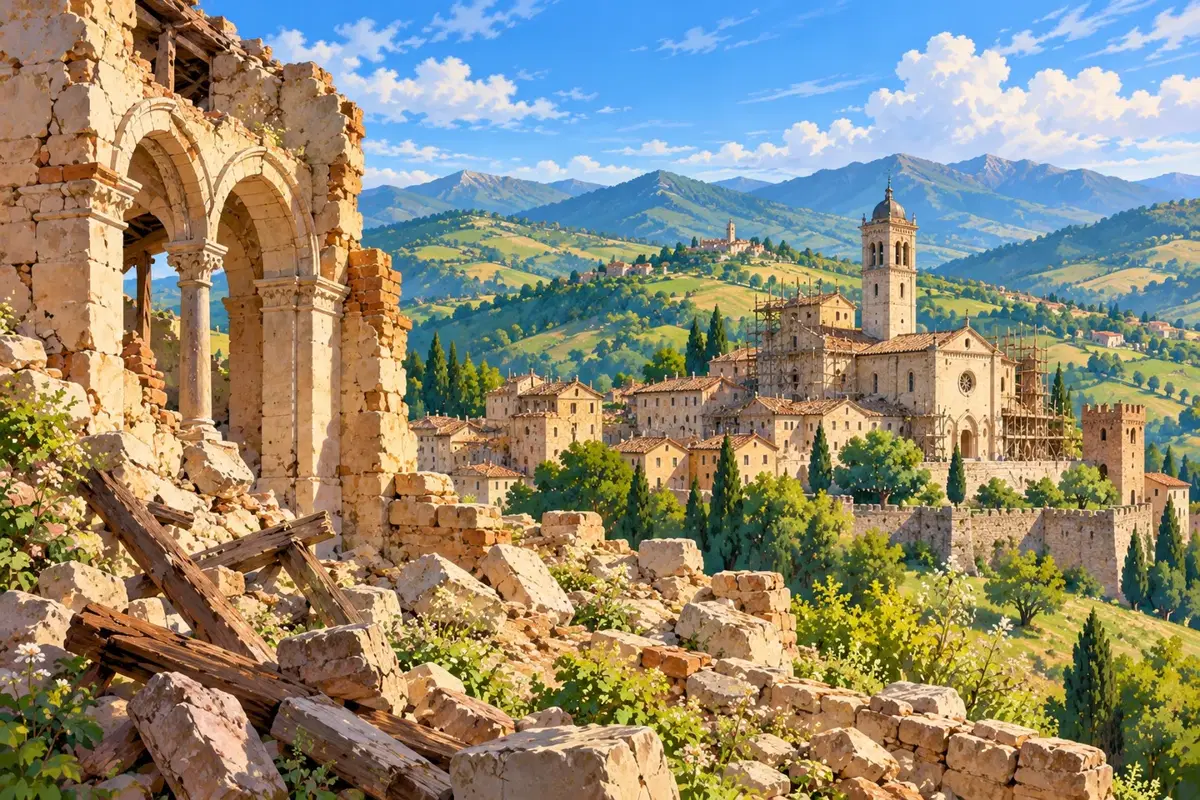
A history of sequences
Marche’s seismic history cannot be reduced to one date. Earthquakes shape community memory, alter buildings and temporarily relocate services and routines. Understanding them means distinguishing the natural event, resulting damage and the long work afterwards: emergency response and reconstruction have different timescales and responsibilities.
On 26 September 1997, two strong shocks hit the Umbria–Marche area, beginning a sequence lasting months. Civil Protection explains how closely spaced events worsened an already difficult situation. Calling it a sequence helps explain why an earthquake’s impact does not end with the first ground movement. [1]
2016 and the geography of affected places
The 2016 central Italian sequence also affected Marche: August and October were distinct stages of a wider crisis. The Region records the 26 and 30 October events and severe damage to buildings and infrastructure. Places were affected differently and have not followed one reopening timetable. [2]
Rebuilding a historic centre means homes, churches, schools, streets and businesses, not just restoring a façade. Camerino shows how public and private work proceeds through separate designs and construction sites. A photograph of a reopened square does not prove that every neighbouring building is accessible. [3]
Visit with respect for life continuing
A visit can include Camerino, Visso or other inland towns, starting with current municipal and cultural-operator information. Check authorised routes and temporary collection venues. Construction sites, barriers and restrictions should not be bypassed for photographs: they mark parts of a town still changing.
A useful encounter leaves time for everyday life: an open museum, a shop, a guided visit. Avoid seeking only images of destruction. Earthquake history includes loss, but also people living, working and restoring their towns’ functions day by day.