The Secret of the Frasassi Caves
Water, limestone and time: understanding Frasassi’s underground landscape and preparing a thoughtful visit.
Sources consulted:
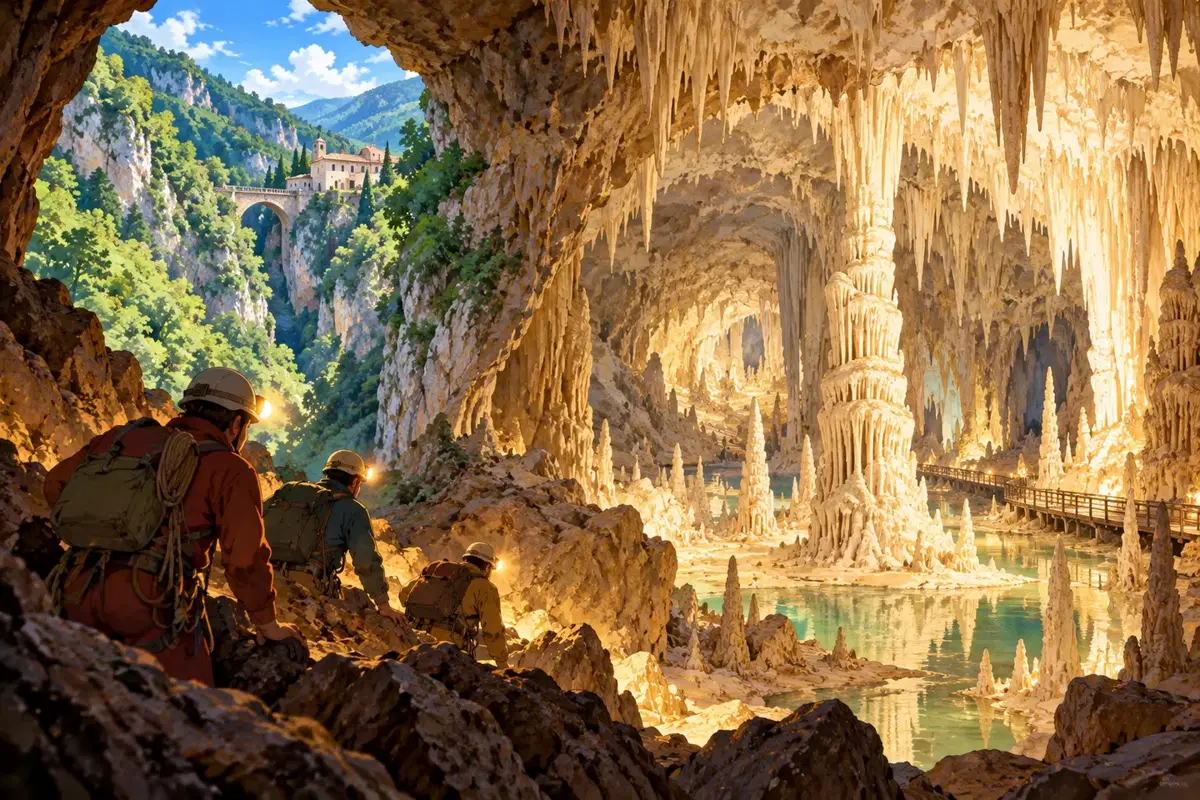
Reading the mountain from within
At Frasassi, the first secret is the difference between a visitor’s time and geological time. The tourist route crosses chambers, mineral formations and water. This story follows that landscape; our separate 1971 story explores the discovery that brought it to public attention. [1]
Water can help both excavate and build. Moving through limestone, it contributes to cavities; depositing minerals, it feeds formations under local conditions. Rock age is not automatically the age of each stalactite: one date cannot describe the whole cave’s different processes. [1]
Forms that are not stage sets
Stalactites hang from above; stalagmites rise from below. The official route also features flowstone and other mineral forms. Evocative chamber names help orientation, but this remains a natural environment rather than something built for an audience. [1]
First look at a whole chamber, then one detail: a drop, a shining surface or the transition from a slender form to a solid mass. This suggested approach goes beyond seeking a dramatic photograph. Do not touch formations and follow your guide along the walkway.
Preparing a visit without surprises
The operator lists around 75 minutes over 1.5 kilometres, at 14 °C inside. Bring a warm layer even in summer and comfortable shoes. There are stairs: visitors with mobility needs should arrange access directly rather than assuming a fitted route is fully accessible. [2]
Add Genga or San Vittore, allowing separate travel time. The Temple of Valadier is a worthwhile pairing only when access is permitted: check official park notices before planning the ascent. A destination’s beauty does not override closures. [3]