In Pioraco, water powered papermaking wheels for centuries
Amid gorges, rivers and workshops, this small village near Macerata developed a lasting manufacturing identity around paper-making.
Sources consulted:
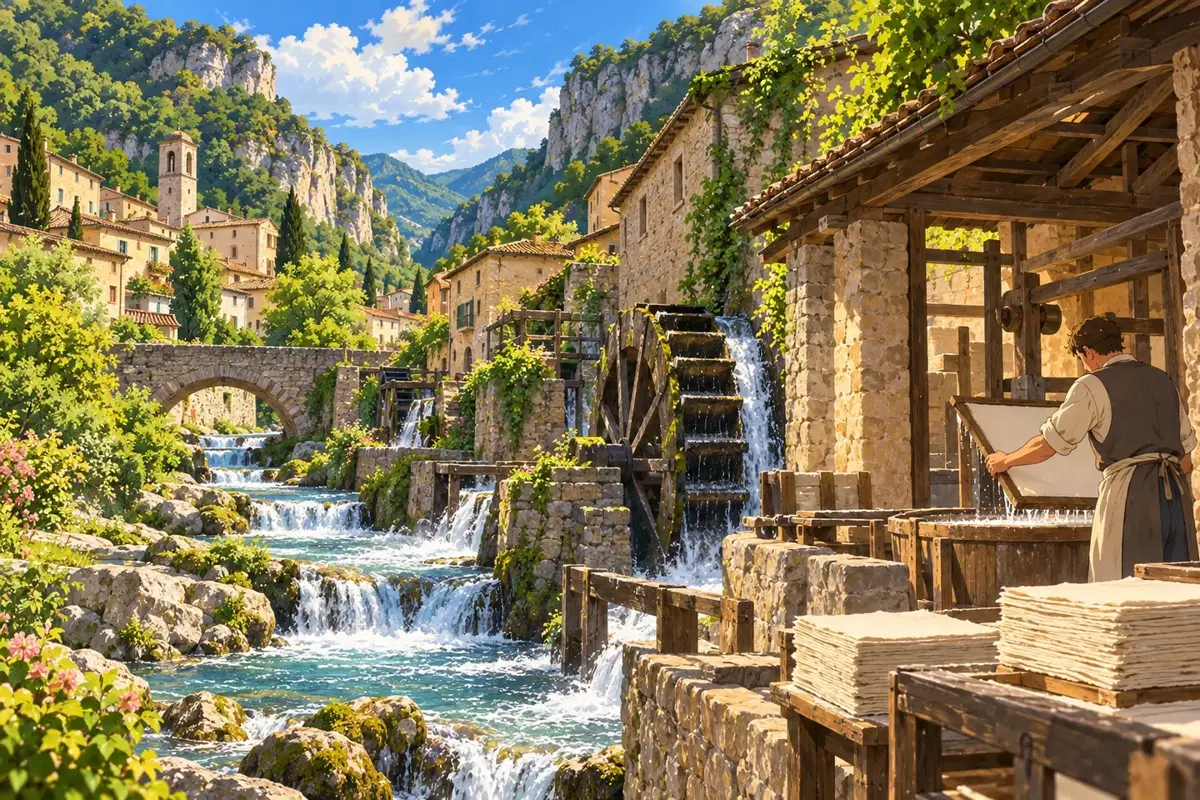
Water as a working force
In Pioraco, paper history begins with water. The town’s identity is linked to this resource and a craft developed in the Middle Ages. The municipal museum traces its transformations, showing that landscape was more than a backdrop to human activity. [1]
Hydraulic energy powered manufacturing equipment. The relationship between watercourse, production building and papermakers’ skills reveals the town as a system: nature and work were not separate stories but parts of the same daily organisation. [1][2]
Inside a paper mill
The Paper and Watermark Museum contains a reconstruction of an old mill, presented by the municipality as a fourteenth-century paper workshop. It is more than a collection of sheets: the route explains tools, movements and stages needed to make paper. [1]
Papermaking demonstrations, when scheduled, restore a sense of production time. Watermarks invite you to hold a sheet against the light: the design belongs to the paper’s construction. Asking how it is made turns the visit into more than photographs of display cases. [1][2]
From museum to village
The municipal tourism portal places the museum in the Via Antonino Pio complex, entered from Piazza Matteotti. Confirm opening, workshops and accessibility: a demonstration mentioned in the museum description is not guaranteed with every admission. [1]
After the museum, explore the historic centre and the relationship between water, homes and workspaces. Extend the day to other collections in the museum complex after checking availability. For waterside walks, verify path conditions and distinguish urban sightseeing from hiking. [2]