At Furlo, the Romans carved a road through the mountain
Along the Via Flaminia, in the Gola del Furlo, a Roman tunnel shows the radical ambition of ancient road engineering.
Sources consulted:
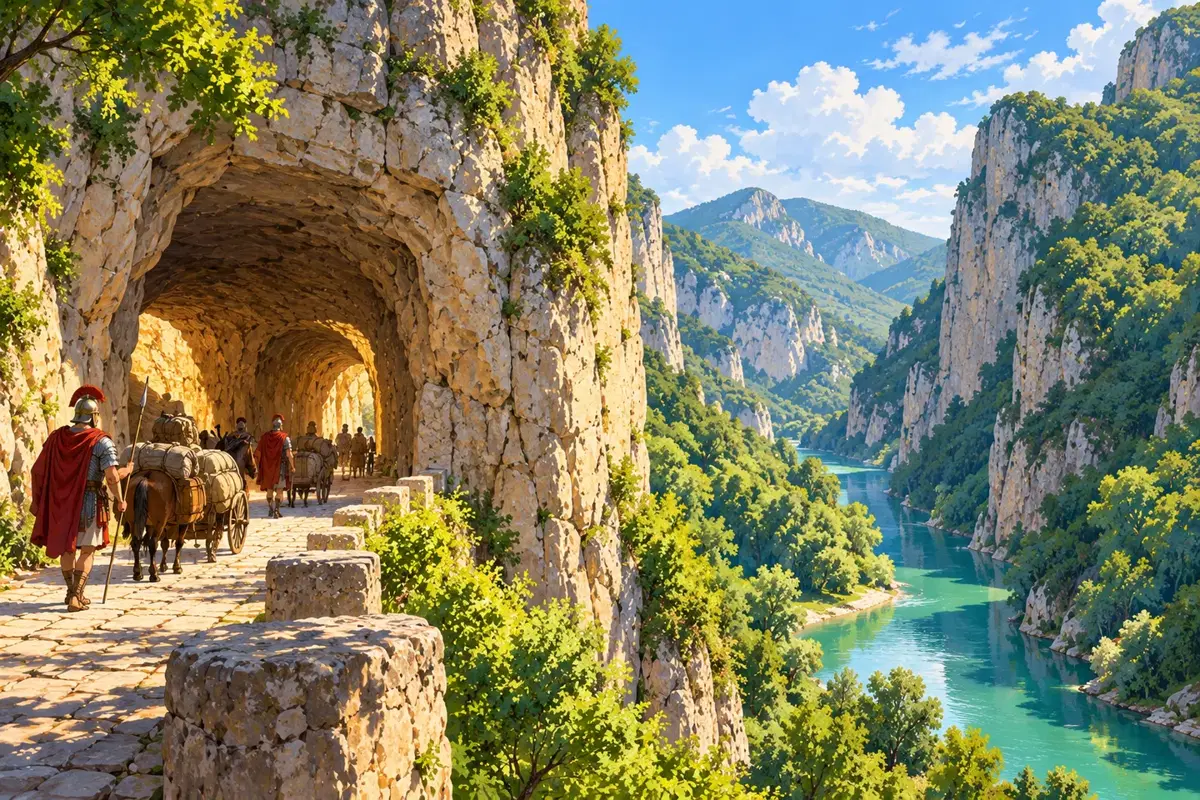
A road through the mountain
At Furlo Gorge, connecting towns meant crossing a narrow passage carved by the Candigliano. Here nature meets the Via Flaminia. The tunnel commissioned by Emperor Vespasian in the first century AD was a practical response to that obstacle, rather than a natural cave adapted for traffic. [1]
The inscription above the entrance connects the work to its patron and to AD 76–77. The larger tunnel is about 38 metres long. Its importance lies less in its length than in making a strategic point on the Roman route between the peninsula’s interior and the Adriatic easier to cross. [2]
Two tunnels, distinct phases
Beside the larger tunnel is an earlier, much smaller passage. Comparing them reveals how the crossing was progressively adapted to the road’s needs. They should not be confused: the small opening and Vespasian’s tunnel belong to the same history of travel but represent separate interventions. [1][2]
Tool marks still reveal human work on the rock walls. Imagine excavation without modern machinery, while remembering that construction was only part of the task: routes also required maintenance and management. The gorge brings together the effects of erosion and political decisions. [2]
Visiting Furlo thoughtfully
Furlo is a nature reserve as well as a Roman monument. Check the managing authority’s notices about roads, trails and restrictions. Visiting archaeology beside the road differs from hiking the slopes: choose according to your experience, the weather and current conditions. [1]
You could combine the gorge with Acqualagna or explore Fossombrone. There is no need to collect stops: allow time to study the rock, river and road alignment. The most interesting detail here is the relationship between these different elements.