Acquaviva’s fortress guarded the border between the hills and the Adriatic
The fortress overlooks the village, telling a story of centuries of conflict, territorial control and military architecture in Piceno.
Sources consulted:
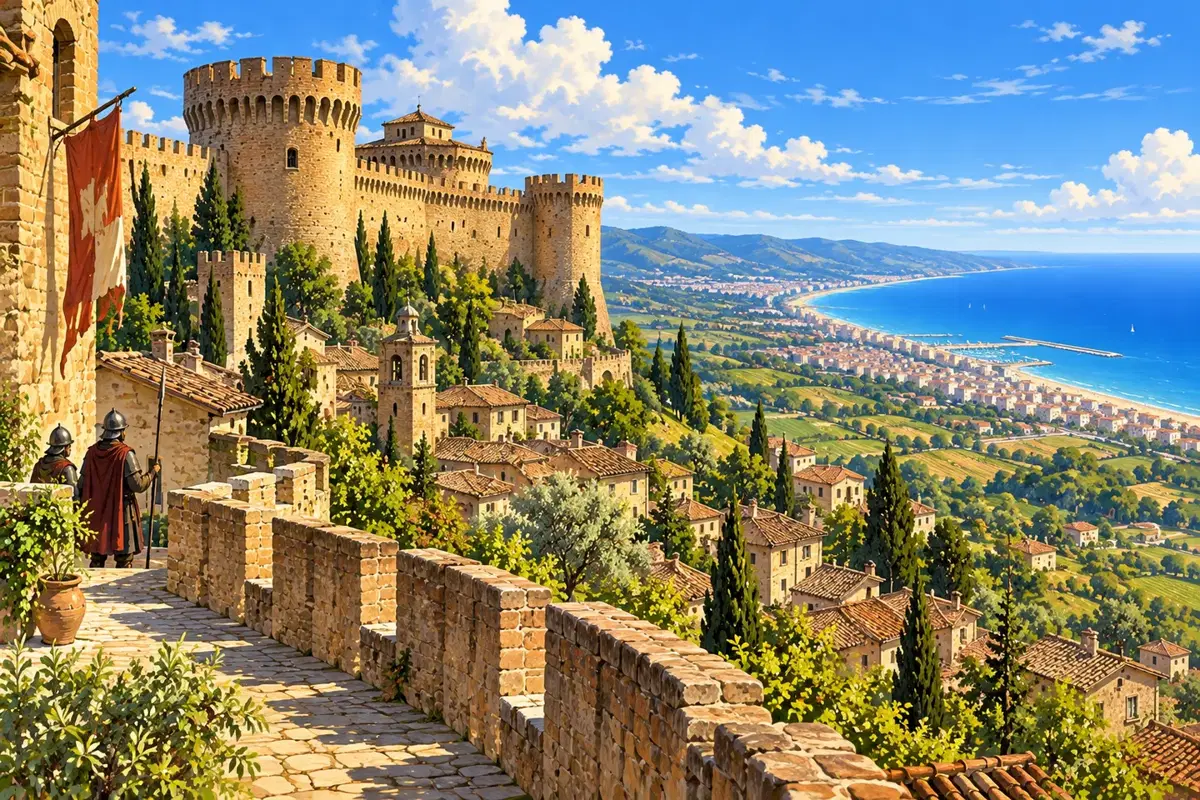
A hill overlooking the roads
The fortress of Acquaviva Picena makes sense in its landscape. Inland from San Benedetto del Tronto, it overlooked connections between coast and hills. The municipality traces its origins to the Acquaviva family and the defence of their medieval possessions. [1]
The castle was not built in one campaign. Repairs and adaptations followed changes in warfare. Municipal documentation mentions Giovan Francesco Azzolino and work attributed to Baccio Pontelli, placing the fortress within Renaissance military transformation. [1]
Reading the keep and landscape
The keep connects architecture and territory. The regional guide describes views from the village towards the sea and Apennines, depending on atmospheric clarity. These are not peaks guaranteed on every visit: weather genuinely changes the experience. [2]
Looking at wall thickness, passages and the relationship with the settlement helps explain a fortress as a system rather than an isolated tower. The village panorama becomes part of the story: today’s viewpoint also helped identify and control approaches.
From fortress to village
Check the fortress operator for opening times, tickets and accessible areas. Do not assume access to the keep: military monuments can involve stairs and narrow passages. Ask about mobility requirements before planning your day around a particular view. [2][3]
After the fortress, walk through the historic centre and notice how it follows the hill. Continue to San Benedetto del Tronto for a coast-and-hinterland pairing: two readings of the same Piceno landscape, requiring a separate transfer.