In Falerone, a Roman theatre still lives on amid the countryside
Falerio Picenus was a fully fledged Roman city. Its theatre, still visible in the rural landscape, is its most spectacular surviving testimony.
Sources consulted:
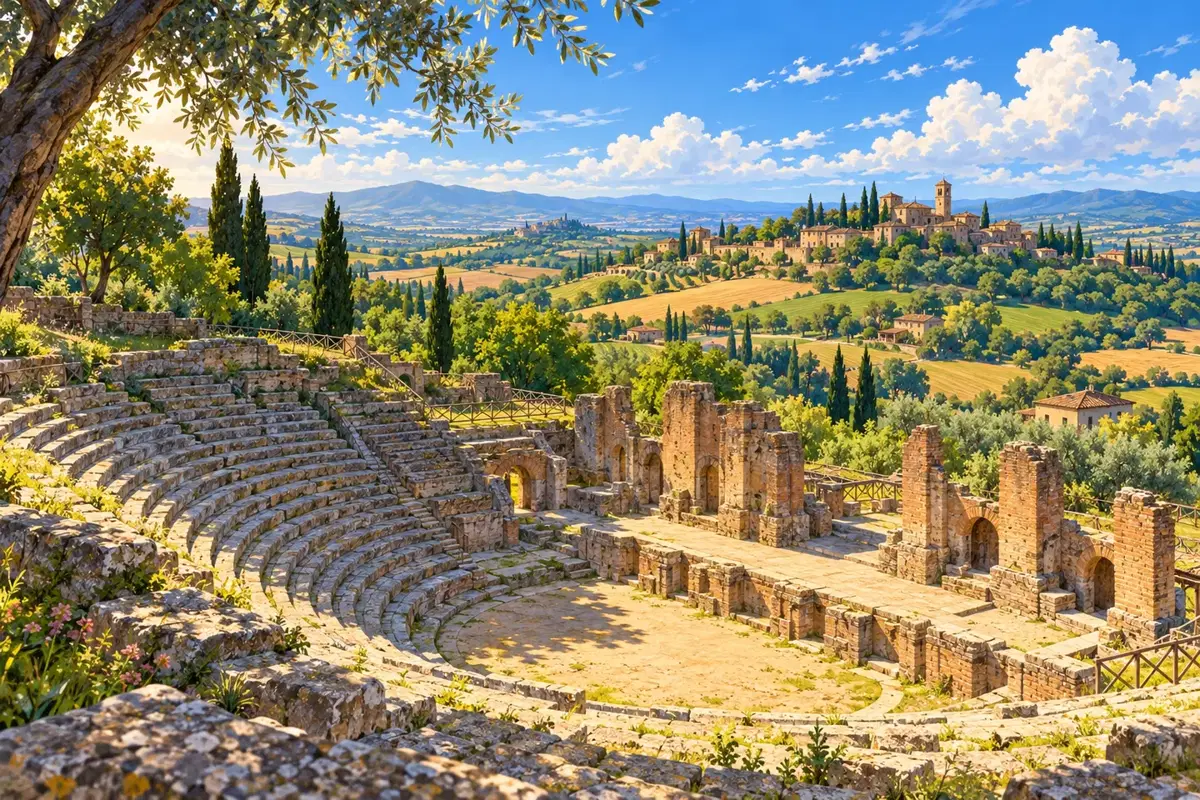
A city beneath Piane di Falerone
Falerio Picenus's theatre stands at Piane di Falerone in the Tenna valley, not in the modern hilltop village. Today's homes, roads and fields occupy territory once belonging to a Roman city, now only partly legible. [1]
Municipal information notes modern construction's impact on the central area, while other sectors retain research potential. The theatre emerges from a transformed landscape, not an untouched city. Missing evidence is also part of its story. [1]
Where audiences sat and actors performed
Seating, orchestra and stage spaces reveal how the building worked. Identify them before imagining a performance: the theatre organised people, views and movement. Its form expresses public habits as well as engineering skill. [2]
Modern protection adds another chapter: the municipality links the archaeological park to the 1994 regional law. Research, conservation and cultural use must work together, explaining why some areas are protected rather than freely walkable. [1]
Plan a visit between valley and village
Navigate to the theatre at Piane di Falerone and check municipal booking arrangements. Extraordinary opening announcements apply to specific dates, not permanent hours. Use the programme for your chosen day when planning events or guided tours. [1][2]
The municipality distinguishes ramp access to the cavea from museum accessibility. Confirm your needs and the complete route: one ramp does not make every area accessible. Falerone village offers a separate complementary visit nearby. [1]