For centuries, Camerino was a small capital hidden in the Apennines
The Da Varano ruled the area for more than three centuries, building fortresses, palaces and a court that attracted artists and culture.
Sources consulted:
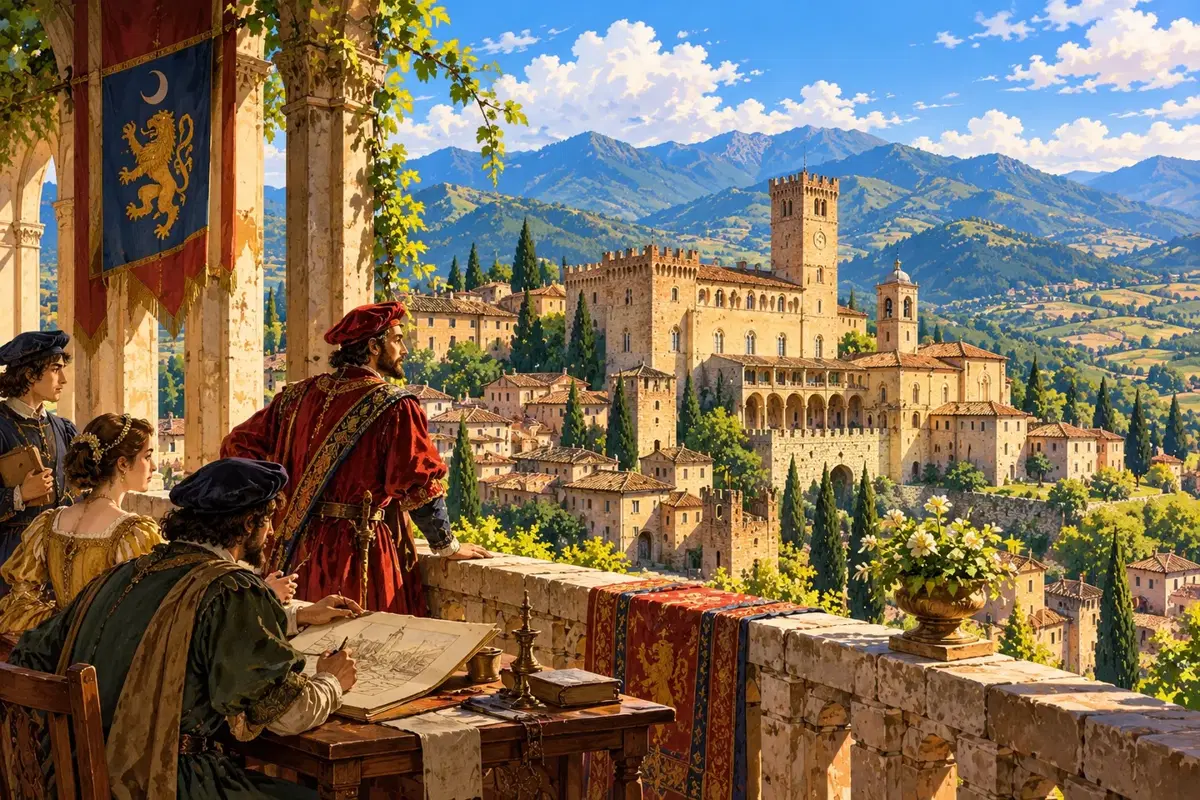
A lordship between valleys and passes
Between the Middle Ages and Renaissance, the Da Varano made Camerino the centre of an Apennine lordship. Its inland position did not mean isolation: controlling routes and valleys built family power while the city became a place of artistic patronage and political representation. [1]
The Marche Region’s cultural itinerary considers architecture alongside works connected with the family. This moves beyond a dynasty told only through battles: buildings and images displayed rank, alliances and ambition, creating a lasting memory. [1]
Fortresses and court culture
Rocca Varano, on a rocky spur outside the centre, makes the territorial dimension of rule visible. Its defences included a second wall circuit, a ravelin with watchtower and a ditch with drawbridge on the western side: elements of one system. [2]
The fortress should not be confused with every fortified building in town: visiting Camerino means distinguishing places, periods and functions. The stronghold suggests routes controlled by the lordship; artistic heritage reveals the language through which that authority sought recognition. [1][2]
A visit following reconstruction
There is a concrete access update: the Region announced Rocca Varano’s reopening on 12 October 2026 after restoration following earthquake damage. It should therefore no longer be described as simply closed; visits still depend on the organised calendar. [3]
Check the municipal tourism portal before travelling: it publishes openings and transport arrangements, including any shuttle services. Verify access to the centre and museums separately. Reconstruction is part of Camerino’s contemporary history and requires updated guidance rather than assumed routes. [2][3]