Why Does Ascoli Piceno Look Carved Entirely from the Same Stone?
Travertine unites squares, churches, towers and palaces in a strikingly harmonious urban landscape.
Sources consulted:
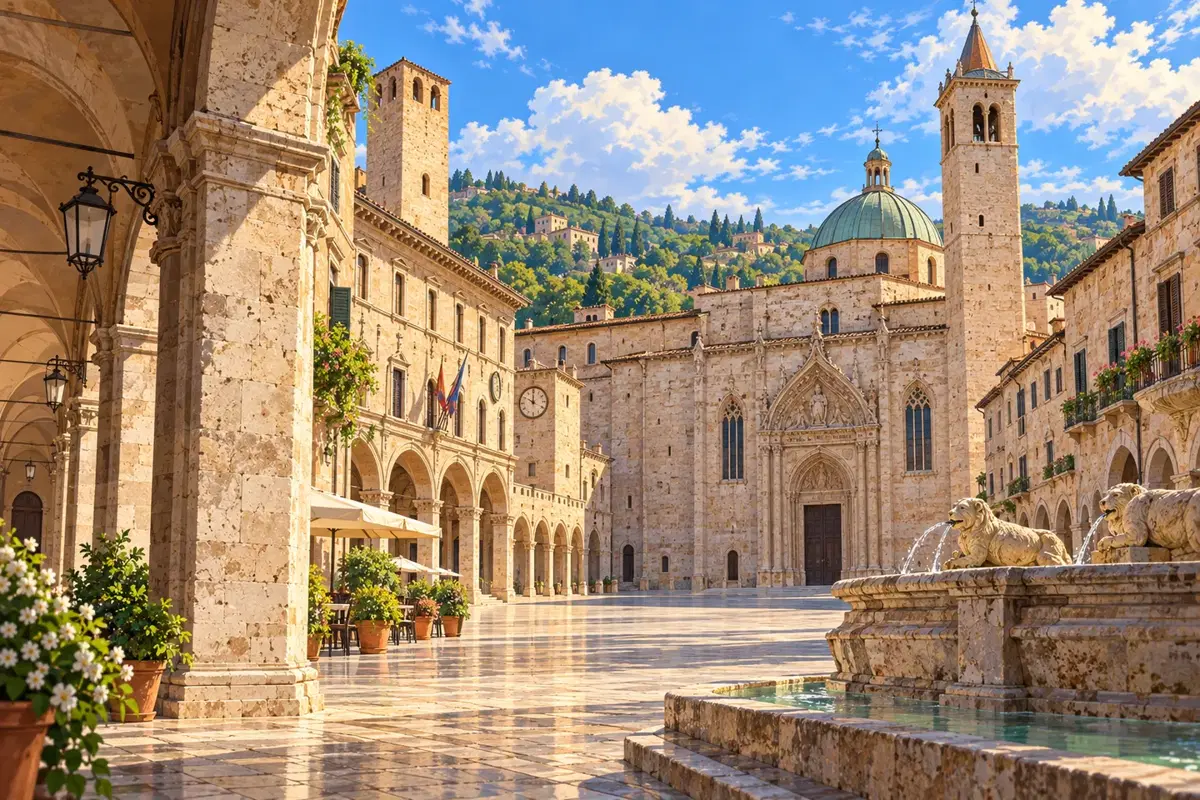
The stone that unites the city
Ascoli Piceno feels coherent before you identify individual monuments. Travertine recurs in squares, towers, churches and palaces: regional tourism describes a centre built almost entirely from it. Almost matters; not every building or detail uses the same material. [1]
Shared colour can make buildings from different periods appear part of one project. The city is layered instead. Its common stone does not erase differences between windows, walls and arches; it provides a thread for noticing them. [1]
From water to worked surfaces
Travertine is chemically deposited limestone associated with calcium-rich water, not automatically marble. Its geological origin invites us to see natural material transformed by cutting, laying and finishing: a human history added to rock formation. [2]
Piazza del Popolo offers a clear viewpoint, framed by Palazzo dei Capitani and San Francesco. Compare the square's proportions with surface details to understand why Ascoli is remembered for light as well as monuments. [3]
A short walk for observant visitors
Start in the square, then enter a side street. The change from open space to alley alters how façades appear. Compare a carved detail with a simpler wall: short distances can reveal the city's material culture.
Check individual venues for interior access and respect religious services. Stone can be observed outdoors: avoid fragile features and climbing monuments. Change viewpoint through light and distance rather than interfering with heritage.