Ancona was founded by Greeks: its name means elbow
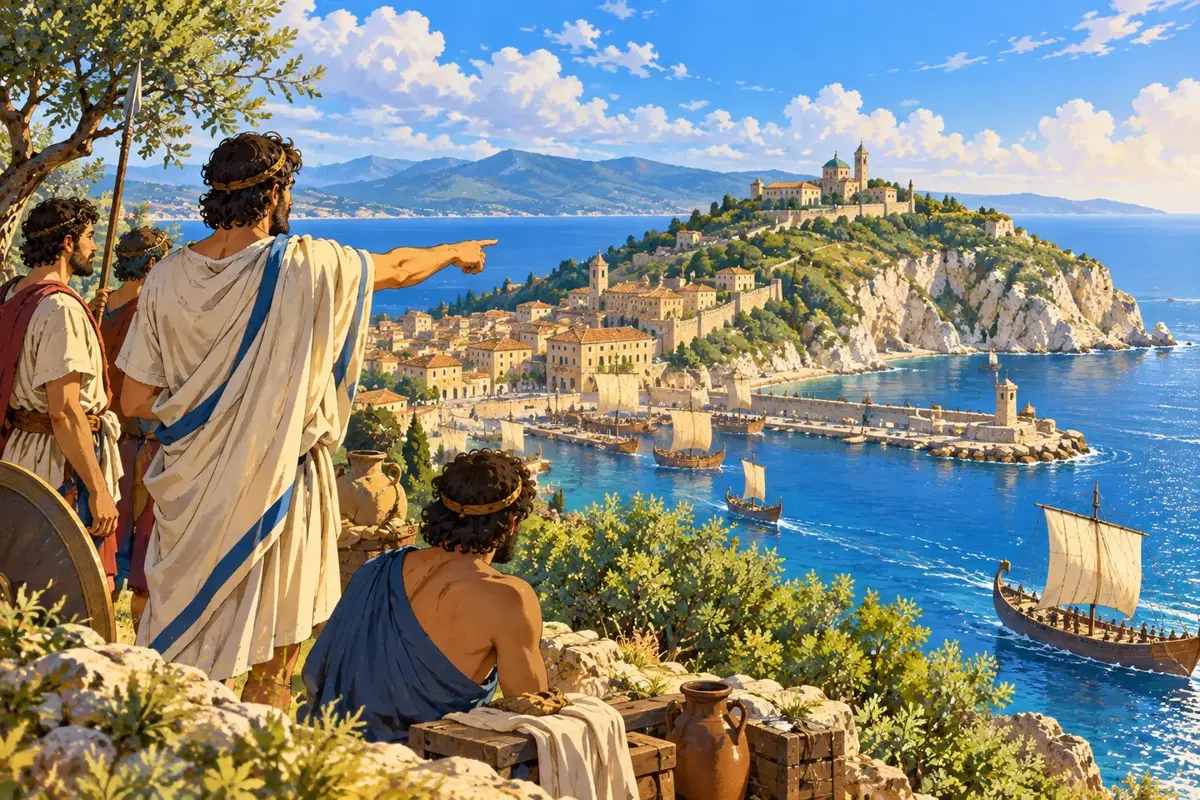
Greek settlers from Syracuse recognised the shape of an elbow in the headland: the city’s name comes from Ἀγκών, Ankon.
Sources consulted:
A name shaped by the coast
Ancona’s name preserves a way of reading the landscape. The Greek Ankón means elbow: the bend in the coast offers natural shelter and helps explain the port’s importance. Before seeking a monument, look for this shape in the relationship between hill, sea and landing place. [1]
Historical tradition dates the Greek foundation to 387 BC and connects it with settlers from Syracuse. This is one stage of the city’s identity, not the beginning of all human presence in the area. Greek Ancona is one strand later woven into Roman, medieval and modern histories. [1]
A changing port, always tied to the sea
The old port reveals continuity, but its visible monuments are not all Greek. Trajan’s Arch is Roman; the Clementine Arch and Vanvitelli’s works belong to another era. Distinguishing periods prevents every structure becoming part of an imaginary, vaguely ancient city. [2]
The official tourism route links landing places, walls and architecture. Notice how each intervention addresses protection, organisation or the presentation of sea access. This continuing port function, more than any single façade, links the word Ankón with today’s city. [2]
From the port to Colle Guasco
View the port, then consider climbing to San Ciriaco Cathedral on Colle Guasco. The change in height helps explain the coastline. Plan according to your abilities: slopes, stairs and working port areas require care, and local restrictions must be respected.
For material evidence, add the National Archaeological Museum of the Marche after checking access. Landscape explains geography, while a museum offers objects and interpretations. Alternating them enriches the visit; avoid automatically identifying every ancient remain on your walk as Greek.