Raphael and the light of Urbino
One of the Renaissance's greatest geniuses was born in Federico da Montefeltro's ducal city. Following in the footsteps of Raphael.
Sources consulted:
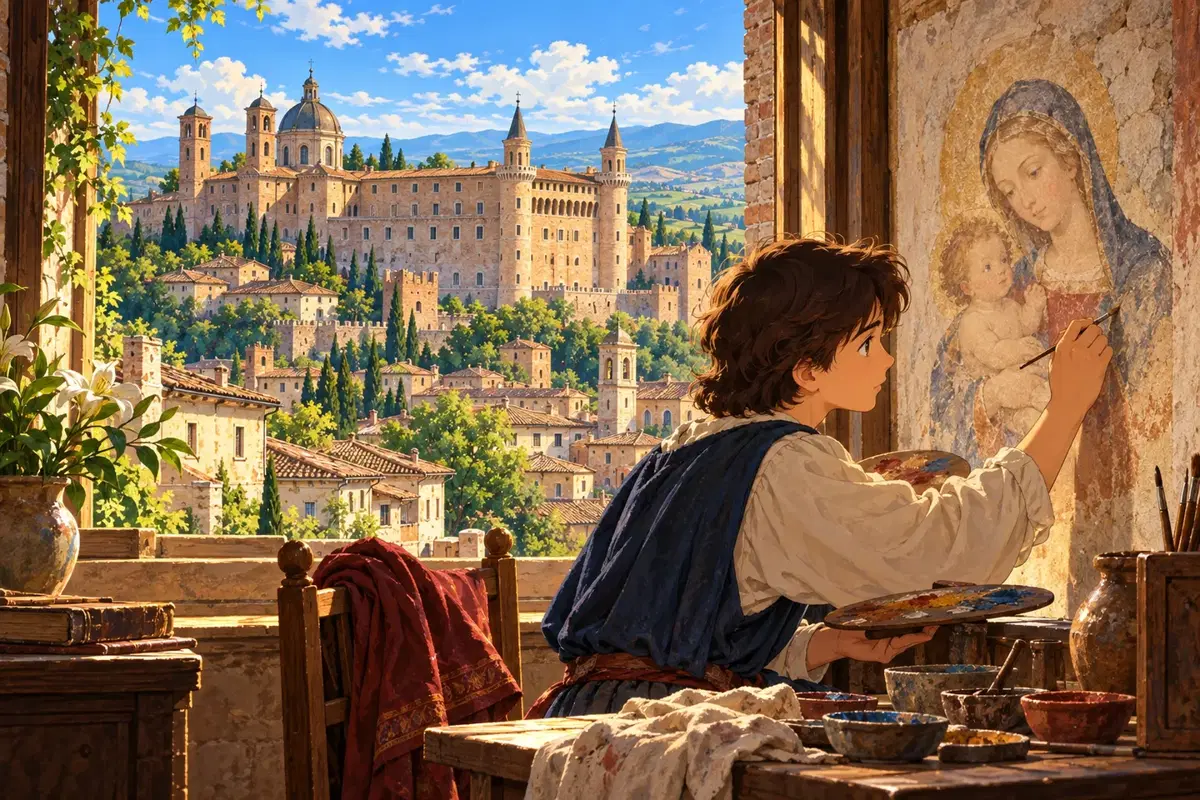
A home in a court city
In Urbino, Raphael’s birthplace introduces the artist before his Roman fame. His family setting and the workshop of his painter father Giovanni Santi place his education within a town where art, work and court culture met, rather than an isolated childhood miracle. [1]
The Accademia Raffaello acquired the house in 1873. Preservation is part of its history too: keeping a home involves choices about how a person is remembered. Visitors encounter both the Santi family’s traces and the academy’s later work of protection and interpretation. [1]
A Madonna, a debated attribution
A fresco of the Madonna and Child occupies the room traditionally identified as the birthplace. The regional museum record notes attribution to either Giovanni Santi or the young Raphael. Calling it a certain work painted by Raphael at fourteen would falsely settle a debate. [2]
Uncertainty does not weaken the visit: it reveals art history comparing works, documents and interpretations. Looking beyond the signature lets you notice the figures’ relationship, the light and the intimate domestic setting in which the fresco is seen today.
From workshop to Ducal Palace
Check the academy’s information for house admission and exhibitions. A historic home differs from a purpose-built museum: ask ahead about specific needs and language resources for your companions. [1]
Continue to the Ducal Palace to compare home and court, arranging separate admissions. Urbino’s sloping streets are part of the experience: allow time to read the town beyond the name of its most famous artist.