Ancient Pisaurum lives on beneath modern Pesaro
The Roman colony founded along the Adriatic left traces beneath the city centre: mosaics, houses and an urban history spanning more than two thousand years.
Sources consulted:
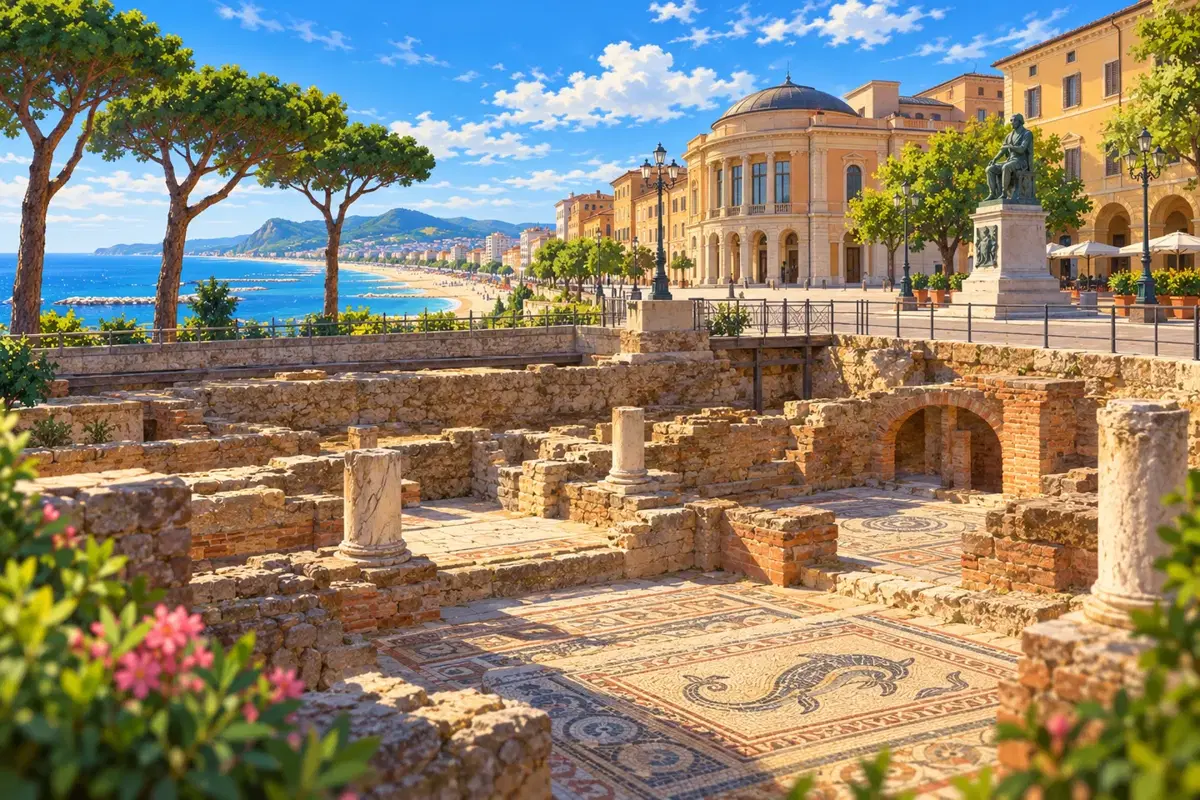
The city beneath the city
To discover Pisaurum, look beneath present-day Pesaro rather than imagine a vanished city elsewhere. The Roman colony, founded in 184 BC, belongs to the town’s history. Its layout and archaeological traces reveal the long continuity of this urban space. [1]
The Domus in Via dell’Abbondanza brings the story down to the scale of a home. Rooms, mosaic floors and connections to the street reveal domestic organisation. This is not a completely reconstructed villa: the route connects surviving archaeological evidence with research-based interpretation. [2]
Small objects, big questions
The displays contain pottery, lamps and other finds, including a small terracotta sleeping Eros highlighted by the museum. These details shift attention from monuments to daily life. A lamp or fragment can prompt questions about habits, materials and how rooms were used. [2]
Virtual reconstructions help explain the ancient rooms. Distinguish the original floor from projections suggesting its setting: one is material evidence, the other an interpretative aid. This does not diminish the experience; it helps you understand archaeology’s possibilities and limits. [2]
Building an archaeological route
Check openings and guided-route availability with Pesaro Musei, as these may vary throughout the year. The route protects the mosaics: follow its instructions and ask specific access questions if using a pushchair or requiring accessible facilities. [2]
Continue with the cathedral mosaics and the Museo Oliveriano’s archaeological collections, checking each site’s access. A home, a place of worship and a collection of finds tell different stories. Between stops, notice how contemporary Pesaro lives alongside these traces.