Why are there so many historic theatres in the Marche?
From provincial capitals to small villages, communities in nineteenth-century Le Marche built a remarkably dense theatre network.
Sources consulted:
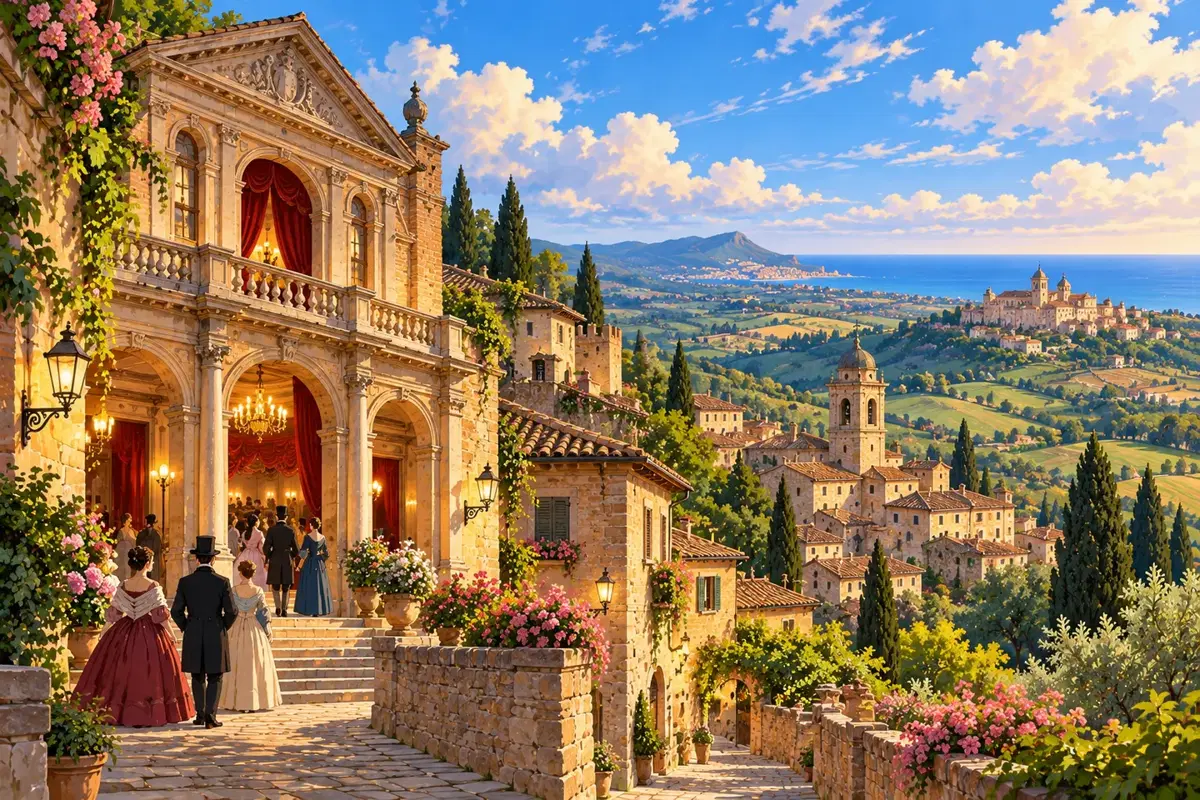
When a community builds a stage
In Marche, a theatre may hide behind a modest façade in a small town or near its main square. This network reflects more than a love of music: communities invested in performance as a place to meet and express their identity. Theatre belongs to urban as well as artistic history.
In the eighteenth and nineteenth centuries, the “condominio” model brought public bodies and citizens together to own and finance theatres. It did not mean residential flats: costs, interests and responsibilities for a cultural building were shared. This system helped theatres spread to smaller towns. [1]
Boxes, sightlines and UNESCO recognition
The Italian-style auditorium arranges stage and audience through stalls and tiered boxes. Foyers and reception rooms extend the experience into conversation and social life. Looking at these spaces explains why a theatre was also somewhere to meet, be seen and discuss the city’s affairs. [1]
In 2026, a serial site of ten central Italian theatres across Marche, Umbria and Emilia-Romagna entered UNESCO’s World Heritage List. They include Fermo’s Aquila, Macerata’s Lauro Rossi, Jesi’s Pergolesi and Offida’s Serpente Aureo. Recognition covers the selected components, not automatically every historic theatre in Marche. [1][2]
Choose an auditorium and return at night
Start with Fermo’s Teatro dell’Aquila and a town-centre walk, or compare auditoriums in different towns. A guided visit explains architecture and decoration; a performance restores the building’s original purpose. These are complementary ways to encounter this heritage rather than interchangeable experiences. [3]
Check each theatre’s operator for programmes, visits, available languages and accessibility: rehearsals and stage work may affect admission. A good itinerary need not collect every auditorium in one day; allow time for the stalls, boxes and the city that chose to build them.