Marche looked far beyond its shores: stories of ancient ports
From Picene Numana to Roman Ancona, objects and monuments reveal an Adriatic of contacts, exchange and power.
Sources consulted:
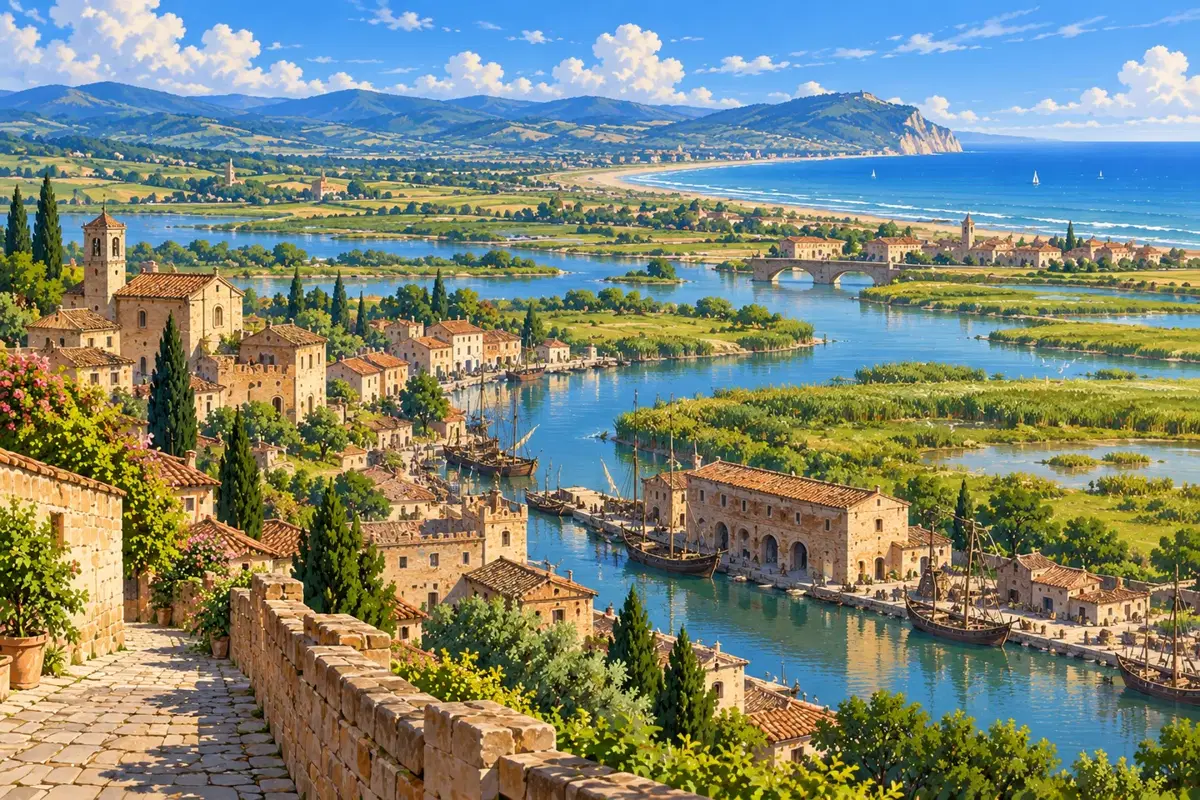
The Adriatic as a road
On a beach today, the sea can seem simply a boundary. For ancient communities it was also a route: goods, people and objects linked different landing places. Marche belonged to Adriatic networks long before beach tourism. Recognising them requires objects and archaeological contexts, not just resemblance between modern and ancient ports.
Numana offers a first clue: Picene cemeteries contain objects and grave goods revealing wealth and contacts. Its archaeological museum reads the coastal landscape through burial evidence. These materials reveal people and social choices, but cannot automatically establish the precise origin of every sailor. [1]
Ancona, the port written in marble
In Ancona, Trajan’s Arch expresses the relationship with the port. It honoured the emperor’s work enlarging and securing the harbour; it was not an ordinary city gate. Its position brings infrastructure, political representation and openness to the sea into one view. [2]
The attic inscriptions place dedications to Plotina and Marciana beside Trajan’s. Materials also express connections: the municipality identifies Greek Hymettus marble in the arch. The monument tells of Rome’s ability to move resources and construct public images across the Mediterranean, as well as of one city. [2]
Connect museum and waterfront
Follow the theme through two experiences: an archaeological visit in Numana and a walk around Ancona’s old harbour. The museum provides objects; the urban landscape suggests harbour functions. They need not fit into one day: allowing time makes the comparison clearer.
Check Numana’s currently open displays, including developments following the new Picene Cultural Centre inaugurated in 2025, and ask operators about venues and bookings. In Ancona, use permitted pedestrian routes only: the harbour remains a working port, not an entirely accessible archaeological park. [3]